

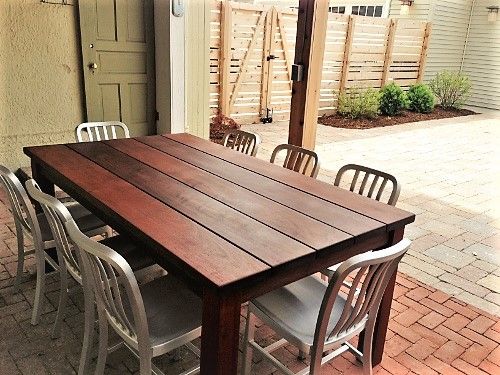
How to Care for Outdoor Wood Furniture
Outdoor furniture lives in conditions that indoor furniture never has to deal with. UV exposure, rain, humidity swings, mildew, wind, and temperature changes all work on a piece over time. The good news is that wood furniture built from the right species and finished correctly is genuinely tough, and keeping it in great shape over the years does not require a lot of time or specialized knowledge.
What it does require is a little consistency. Here is a practical guide to protecting, cleaning, and maintaining outdoor wood furniture so it lasts the way it was built to.
How to Protect Outdoor Wood Furniture
Protection starts with the finish, and maintaining that finish is the single most important thing you can do to extend the life of any outdoor wood piece.
Think of it the same way you think about your deck or your fence. You would not let those go years without any attention and expect them to look good. Outdoor furniture works the same way. The finish is what stands between the wood and everything the weather throws at it, and once that finish breaks down, moisture gets in and the aging process accelerates.
For pieces finished with a penetrating sealer or oil, plan on a reapplication roughly once a year, or whenever you notice the wood starting to look dry or the water is no longer beading on the surface. The process is straightforward: clean the piece thoroughly, let it dry completely, and apply a fresh coat. No heavy sanding required.
For pieces finished with a top coat such as spar urethane or an exterior-rated clear coat, the protection lasts longer but the maintenance when it is eventually needed is more involved. When the finish starts to peel, crack, or lose its clarity, the piece needs to be sanded back to bare wood and refinished from scratch. It is more work, but it only comes up every several years under normal conditions.
If you are not sure which finish your piece has, get in touch and we can help you identify it and walk you through the right maintenance approach.
How to Protect Outdoor Furniture from Wind and Weather
The best protection beyond the finish is simply keeping your furniture covered or sheltered when it is not in use, particularly during periods of harsh weather or extended time off.
A well-fitting canvas or weather-resistant cover does a lot of work. It keeps UV from breaking down the finish, prevents water from sitting on surfaces after rain, and reduces the temperature swings that cause wood to expand and contract repeatedly. If you can bring pieces into a garage or shed during the winter months, that is even better. Wood furniture that does not spend the off-season exposed to freezing temperatures and repeated freeze-thaw cycles simply lasts longer.
For wind specifically, heavier solid wood pieces are less susceptible than lighter furniture, but it is still worth considering placement. A spot with some shelter from prevailing winds, whether from a fence, a wall, or a hedge, reduces the wear on both the furniture and the finish over time.
How to Clean Outdoor Wood Furniture
Regular cleaning is the foundation of good maintenance, and it does not need to be complicated. For routine cleaning, a soft cloth or brush and a mild soap and water solution is all you need. Wipe down the surfaces, rinse with clean water, and let the piece dry fully before using it or covering it.
Avoid pressure washers on finished wood furniture. The force of the water can drive moisture into the grain, lift the finish at the edges, and damage the surface in ways that are not immediately obvious but show up as deterioration later.
For pieces that have been sitting outside for a while and have accumulated a season's worth of grime, a slightly stronger cleaning solution can be used before the annual maintenance application. Just make sure whatever you use is compatible with your finish type and rinse thoroughly.
How to Remove Mildew from Outdoor Furniture
Mildew is a common issue for outdoor furniture, particularly in humid climates or in spots that do not get much air circulation or sunlight. It shows up as dark spots or a grayish film on the surface, and it can spread if it is not dealt with promptly.
For finished surfaces, a solution of mild dish soap, water, and a small amount of white vinegar handles most mildew without damaging the wood or the finish. Apply with a soft brush, scrub gently, rinse thoroughly, and let the piece dry completely in a sunny spot.
For more stubborn mildew on unfinished or lightly finished surfaces, a diluted oxygen bleach solution works well. Avoid chlorine bleach on wood, as it can strip color and damage the grain. After treating and rinsing, let the wood dry fully before applying any maintenance finish.
Preventing mildew is easier than removing it. Good air circulation around stored furniture, avoiding covers that trap moisture rather than repelling it, and keeping up with annual maintenance all reduce the conditions mildew needs to take hold.
Annual Maintenance: What to Do at the Start of Each Season
A once-a-year check-in at the start of the outdoor season is the simplest way to keep outdoor wood furniture in consistently good shape. It takes a couple of hours and pays off in years of extra life.
Start with a thorough cleaning. Remove any surface grime, mildew, or debris from the previous season. Let the piece dry completely, ideally for a full day in dry conditions.
Inspect the finish. Look for areas where the finish has worn thin, started to crack, or lifted. If you catch these early, a spot treatment and a fresh coat of sealer or oil is often enough to address them without stripping the whole piece.
Check the hardware and joints. Tighten any fasteners that have loosened over the winter. Look for any separation at the joints and address it before it becomes a structural issue.
Apply maintenance finish if needed. For sealed or oiled pieces, this is typically part of the annual routine. For top-coated pieces, this step only comes up when the finish shows signs of failure.
That is really the whole process. None of it is complicated, and the time you put in at the beginning of the season is a lot less than what you would spend dealing with a piece that has been allowed to deteriorate.
Storing Outdoor Furniture in the Off-Season
Bringing pieces in for the winter is the single best thing you can do for their longevity. A garage, a basement, or a shed all work. The goal is to get the furniture out of freeze-thaw cycles and prolonged moisture exposure.
If indoor storage is not an option, high-quality covers in a breathable, water-resistant material are the next best thing. The key word is breathable. Covers that trap moisture underneath them can actually create more mildew problems than leaving the furniture uncovered in some conditions. Look for covers with vents or with a material that allows some air movement while still blocking rain and UV.
Before covering or storing, make sure the furniture is clean and dry. Storing damp wood is an invitation to mildew. A fresh application of sealer before storage gives the piece an extra layer of protection over the off-season.
What to Do If Your Outdoor Furniture Needs More Than Maintenance
Even well-maintained outdoor furniture eventually needs more than a fresh coat of sealer. If your piece has surface scratches, weathered areas, or a finish that has fully broken down, a refinish is the right answer, and for solid wood furniture built from quality species, refinishing is very much a viable option.
The process involves sanding back to bare wood, addressing any issues with the surface, and applying a fresh finish from the beginning. Done properly, a refinished outdoor table or chair can look essentially new and buy another decade or more of useful life.
If you have a piece that was built by us and needs attention, reach out. We can advise on the right approach for the species and original finish, and in some cases we can take the piece back in for refinishing directly.
A Few Simple Habits That Make a Big Difference
Beyond the annual maintenance routine, a handful of everyday habits go a long way toward keeping outdoor wood furniture looking good and lasting well.
Don't let dishes or drinks sit in one place for hours. Prolonged contact from a cold glass or a hot dish can affect a finish over time, even outdoors. Moving or wiping the surface between uses protects the finish without needing a mat or trivet in the way.
Wipe up spills promptly. Water that sits on a surface works its way into any small imperfections in the finish. A quick wipe-down after meals or rain is a habit worth building.
Keep the furniture out of standing water. Make sure the legs have clearance from puddles or water that pools on the patio after rain. Furniture feet are often the first place rot takes hold.
Do not drag furniture across rough surfaces. The finish on the legs and feet takes a beating when pieces are dragged across concrete or stone. Lift rather than drag, or use felt pads under the feet.
Outdoor wood furniture that is well cared for genuinely ages beautifully. The grain deepens, the surface develops character, and the piece becomes something that looks like it belongs in the space rather than something that was just placed there. That is what we are building for, and these habits are what gets you there.
If you have questions about caring for a specific piece, or if you are thinking about new outdoor furniture and want to understand how to maintain it before you commit, we are happy to talk through it. Contact us or call 847-401-7753 anytime.


