

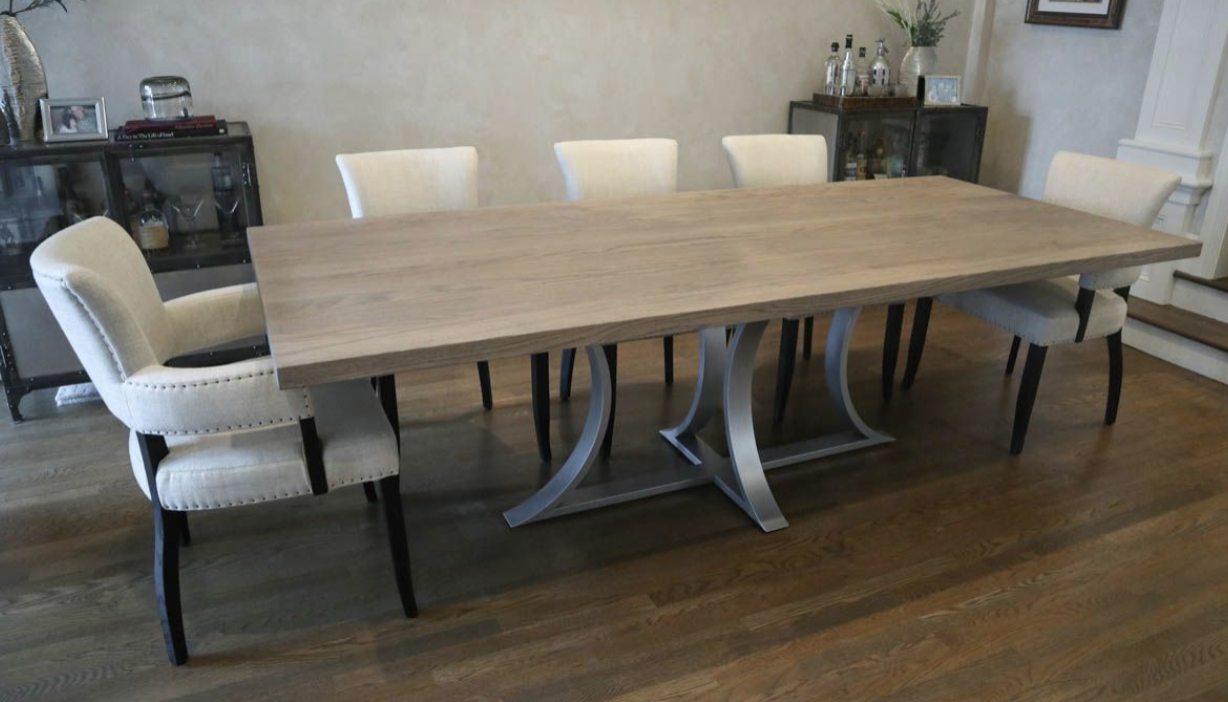
The dining table is one of the hardest working pieces of furniture in your home. It holds dinner on a Tuesday, a puzzle on a rainy Saturday, a stack of homework on a weeknight, and a full holiday spread a few times a year. Getting it right means thinking through a handful of things before you commit, and we are here to help you do exactly that.
Whether you are starting from scratch in a new space or replacing a table that never quite fit, this guide covers how to choose a dining table that works for your room, your household, and the way you actually live.
Start with the Room, Not the Table
Before you start looking at styles and materials, get clear on the space you are working with. Measure the room and mark out the footprint of the table on the floor with tape. Then pull chairs up to the tape and see what is left around the edges.
A good rule of thumb: leave at least 36 inches between the edge of the table and the wall or any other furniture. That gives people enough room to pull a chair out and sit down without bumping into anything. If you have a smaller dining room, 36 inches is a workable minimum. If you have the space to go wider, 42 to 48 inches gives the room a more comfortable, open feel.
Traffic flow matters too. Think about where people walk through the space, where the kitchen entry is, and whether anyone is going to be squeezing past chairs on their way to the back door. A table that looks perfect in a showroom can feel like an obstacle course at home if the clearances are off.
How to Choose Dining Table Size
Size is the decision that trips most people up, and it is the one that is hardest to undo after the fact. Here is a practical way to think it through.
For seating count, a general guideline is to allow 24 inches of table length per person. A 60-inch table seats four comfortably, six if you do not mind elbows touching. A 72-inch table seats six easily, and can manage eight. An 84- to 96-inch table is where you get into eight to ten seats.
Width matters as much as length. A table that is 36 inches wide gives you enough room for a centerpiece and two place settings across from each other without things feeling cramped. Drop 32 inches below, and the table starts to feel narrow in daily use.
One more thing worth thinking about: do you entertain regularly, or is the table mostly for your household day to day? If you host often, it is worth sizing up. A table that seats six works fine for a family of four and gives you room to grow when company comes. If you rarely have guests, a smaller table can make the room feel more proportional and less empty on a regular Tuesday night.
Round vs Rectangular Dining Table: Which One Is Right for Your Space
This is one of the most common questions we hear, and the honest answer is that it depends on the room and how you use the table.
A rectangular dining table is the most versatile shape. It works in almost any dining room, seats more people per square foot of floor space, and is the natural choice for longer, narrower rooms. It also tends to read as more formal, which makes it a good fit if your dining room is a dedicated space that gets set for dinner.
A round dining table works beautifully in a square room where a rectangle would leave awkward corners. It promotes conversation because everyone can see each other without turning their heads, which is why round tables feel more relaxed and social. The trade-off is that a round table takes up more floor space per person and can feel oversized if the diameter gets too large for the room.
A practical note on round tables: they do not have a head of the table, which can be an asset or a drawback depending on your household. If you want flexibility for an extra guest, a Round Dining Table on a pedestal base can often squeeze in one more chair where a four-leg table cannot.
Shape Beyond Round and Rectangular
Square dining tables work well in a square room and are ideal for four people who want the intimacy of a round table with the clean lines of a rectangular one. They can feel limiting if you regularly need to seat more than four.
Oval dining tables offer the best of both worlds in some ways: the soft outline of a round table without the seating constraints of a perfectly round slab. They work especially well in rooms where a rectangular table would feel too angular or where a round table would feel too large.
If you are building a custom piece with us, shape is one of the easier things to tailor to your space. We can work from dimensions that fit your room exactly rather than asking you to make a standard size work.
Farmhouse Dining Table Ideas
A farmhouse dining table brings warmth, character, and a sense of lived-in ease to any dining room. The appeal is in the details: chunky legs, visible joinery, natural wood grain, and a look that gets better with the occasional scratch or ring.
For a farmhouse table that reads as thoughtfully designed rather than just rustic, a few things make a big difference. Thick, substantial legs anchor the piece and keep it from looking flimsy. A trestle or turned leg base tends to feel more intentional than simple square legs. And the wood you choose matters a lot: walnut and white oak both lend themselves well to farmhouse styling, and both age gracefully.
Finish choices shift the feel considerably. A lightly wire-brushed surface with an oil finish reads rustic and organic. A smooth surface with a natural stain reads more refined farmhouse. If you are going for a specific vibe, share some inspiration photos when you reach out, and we can walk you through the options that best match it.
Farmhouse tables pair naturally with mismatched chairs, bench seating on one or both sides, or a combination of the two. That flexibility is part of their appeal: they are forgiving, versatile, and hard to over-style.
Choosing a Wood Species
The wood you choose shapes the color, grain character, and overall feel of the table. Here is a quick overview of the species we work with most for dining tables:
Walnut: Rich brown heartwood, tight straight grain, and a natural elegance that works in everything from mid-century rooms to modern farmhouse spaces. One of our most frequently requested species for dining tables.
White Oak: Lighter and more neutral than walnut, with a distinctive ray fleck pattern in quartersawn cuts. Versatile enough to work in almost any room and a strong choice if you want the table to feel airy rather than heavy.
Elm: Interlocked, swirling grain that gives the table a lot of natural drama. A great choice for farmhouse and rustic applications where character is the point.
Maple: Fine, consistent grain with a light, clean palette. A good option for contemporary spaces or for a table you want to finish in a darker stain, since maple takes stain evenly.
Not sure which species fits your room? Send us a photo and we can talk through what makes sense for the look and feel you are going for.
Base Styles and Why They Matter
The base does a lot of work beyond holding the top up. It determines how many people can sit comfortably at the table, how much legroom there is, and how the piece reads in the room.
A four-leg base is the most classic option. It is stable, visually straightforward, and works in nearly any style. The trade-off is that the corner legs can get in the way of corner seating, which limits how many people you can fit along the ends.
A trestle base eliminates the corner legs and gives you more flexibility on seating count, especially at the ends of a longer table. It also reads as more substantial and architectural, which suits farmhouse and rustic styles particularly well.
A pedestal base works well on round and oval tables. It frees up legroom on all sides and makes it easier to squeeze in an extra chair. On a very large table, a double pedestal tends to look more proportional than a single center post.
For metal bases, powder coat color makes a significant difference in tone. A matte black base pushes the piece toward industrial or modern. A raw or oiled steel finish reads more rustic. A lighter gray or white powder coat keeps the piece feeling relaxed and Scandinavian. We can discuss the options when you reach out.
How to Set the Dining Table
Once you have the table, it helps to think about how you will dress it day-to-day and when you are entertaining. A well-set table does not require a lot of gear, but a few good habits make a difference.
For everyday use, a simple centerpiece, whether that is a small plant, a candle, or a bowl of fruit, keeps the table looking intentional without requiring any effort. Placemats protect the surface and add a layer of texture. If your table has an oil finish, coasters under glasses are a good daily habit.
For entertaining, a few guidelines that hold up well: forks go to the left of the plate, knife and spoon to the right, glasses above the knife. The goal is a setup that feels welcoming and easy rather than fussy. If you want to go more formal, charger plates under the dinner plate and a folded napkin can elevate a simple table setting considerably.
One practical note: if you are using a wood dining table, avoid leaving hot dishes directly on the surface without a trivet or pad. Most wood finishes can handle a warm plate, but a cast iron skillet straight from the oven is a different story.
Custom Dining Tables: What to Expect
If you have worked with us before, you know how the process goes. For those of you who are new to it: designing a custom dining table is more straightforward than most people expect, and the result is a piece that fits your space and your life in a way that a catalog piece rarely can.
You tell us the size you need, the look you are going for, the wood species you are interested in, and any specific requirements around base style or finish. We take it from there: sourcing the slab or lumber, working through the design details with you, and building the piece to order. If you have too many options, as plenty of our customers have said with a laugh, that is the whole point. We do not believe one size fits all, and a dining table is one of the most personal pieces in a home.
Browse our portfolio, send us a photo of your dining room, or reach out with a few dimensions and some inspiration. We are here to help you figure out what fits.


