

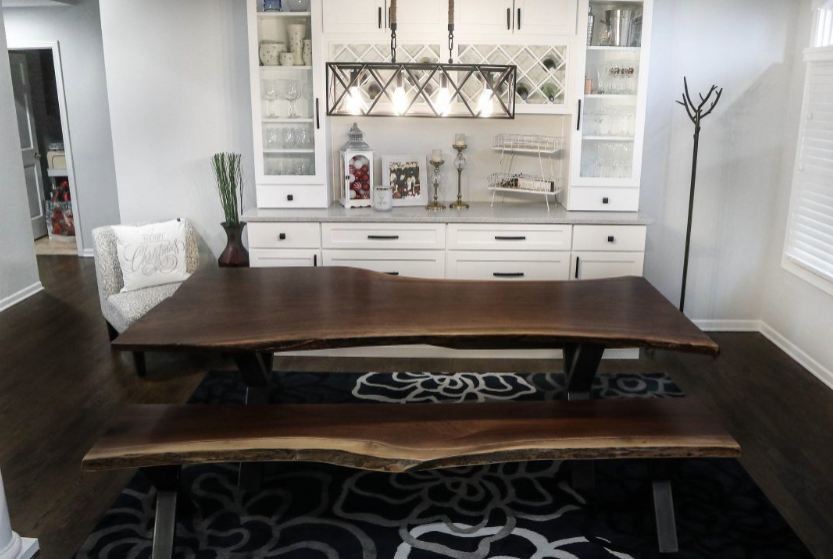
The modern farmhouse dining room has become one of the most searched and most loved interior styles for good reason. It strikes a balance that is hard to find elsewhere: warm enough to feel lived-in and welcoming, clean enough to feel intentional and put-together. It does not require a century-old house or an actual barn. It works just as well in a new build, an older colonial, or an open-plan loft if you know which elements to lean into.
This guide covers what the style actually means, how to build a farmhouse dining room from the ground up, and how to layer in the details that make the look feel cohesive rather than assembled from a checklist. Whether you are starting with an empty room or trying to refresh a space that has never quite come together, there is something here for every stage of the process.
What Is Modern Farmhouse Style
Modern farmhouse style is not one single look. It is a design approach that draws on the warmth, honesty, and practicality of traditional farmhouse interiors and pairs them with the cleaner lines, lighter palette, and more restrained sensibility of contemporary design.
The traditional farmhouse aesthetic leans heavily on raw materials, aged finishes, and the kind of furnishings that look like they have been in the family for generations. Modern farmhouse keeps the natural materials and the warmth but edits out the clutter and the heaviness. The result is a space that feels genuinely relaxed without looking neglected, and designed without looking sterile.
In a dining room specifically, modern farmhouse style tends to mean a substantial wood table, seating that mixes textures and materials, lighting that makes a statement without being ornate, and a palette built around natural tones with thoughtful contrast. The style rewards restraint. A few well-chosen pieces carry more weight than a room full of rustic-themed accessories.
The Table Is the Starting Point
Every farmhouse dining room starts with a custom wood table, and in the modern farmhouse version, the table does a lot of work. It is typically large enough to feel generous and welcoming. It is made from solid wood, with enough grain character and natural presence to anchor the room without demanding a lot of decoration around it.
A trestle base is a natural fit for the style: it reads architectural and sturdy, it gives everyone comfortable legroom, and it has the visual substance that lighter, more contemporary bases sometimes lack. A farmhouse table on hairpin legs can work in a more transitional space, but for a room that leans more rustic, the trestle or chunky turned-leg base tends to feel more authentic.
Wood species matter here too. Walnut gives the table depth and a refined quality that keeps the modern farmhouse look from going too rustic. White oak reads lighter and more relaxed, which suits a room with a lot of natural light or a palette that runs cool and neutral. Elm brings the most character, with its swirling interlocked grain and warm reddish tones. If your goal is a rustic modern farmhouse dining room that leads with texture and natural drama, elm is worth considering seriously.
Because we build to order, you are not choosing between the options in a showroom. You can tell us the size you need, the species that fits your room, and the base style that makes sense for the look you are going for. We will work through the details with you.
Farmhouse Dining Room Chairs and Bench Seating
One of the defining moves in farmhouse dining room design is mixing seating types at the same table. Chairs on the sides and ends with a bench along one or both long sides is the classic arrangement. It is practical, it seats more people when you need it to, and it gives the setup a relaxed, informal quality that matching chair sets rarely achieve.
For the chairs, upholstered seats in linen, cotton, or a performance fabric add softness and comfort without pulling the room away from the natural material palette. Wooden chairs with a simple turned or tapered leg work well in more rustic applications. Mixing the two, upholstered chairs at the heads and wooden chairs or a bench along the sides, is a versatile approach that suits almost any farmhouse dining room.
Metal accents in the chair legs or frame, particularly in a matte black or oil-rubbed finish, add contrast and keep the seating from feeling overly traditional. That contrast between natural wood and dark metal is one of the signature moves of modern farmhouse design across every room type.
Rustic Dining Room Ideas That Actually Work
Rustic does not mean unfinished or accidental. The best rustic dining room ideas are rooted in deliberate choices about materials, scale, and contrast. Here are a few approaches that come up consistently in rooms that get the look right.
Let the table be the most textural element in the room. If the table has strong grain character or a live edge, keep the surrounding pieces quieter. A room where everything is competing for attention ends up feeling busy rather than layered.
Bring in contrast through metals and textiles. A solid wood table with black metal chairs, or warm wood with linen upholstery and a jute rug, creates the kind of visual balance that makes a room feel considered. Contrast is what keeps rustic design from reading as monotonous.
Think about the walls and ceiling. Exposed beams, shiplap, or board-and-batten paneling are all natural complements to farmhouse furniture. If your room does not have architectural details, a simple painted wall in a warm white, greige, or earthy tone does the same job with less effort.
Light matters more than most people expect. A statement pendant or chandelier positioned low over the table, within about 30 to 36 inches of the tabletop, creates the intimacy that farmhouse dining rooms are known for. Rattan, aged metal, and simple linen shades all work well. Anything too polished or too ornate pulls the room in a different direction.
Modern Farmhouse Dining Room Decor: Getting the Details Right
The best modern farmhouse dining room decor is the kind that does not look like it was purchased all at once. The goal is a room that feels layered and lived-in, with each piece earning its place rather than filling a category on a checklist.
A centerpiece on the dining table sets the tone for the whole room. Simple works best: a low wooden bowl, a cluster of candles in varying heights, a few stems in a simple ceramic vase. Anything that sits below eye level when people are seated keeps the table feeling open and conversation-friendly.
Textiles bring warmth without bulk. A runner down the center of the table, placemats in natural fiber, and cloth napkins are easy ways to add texture and color without committing to anything permanent. A rug under the table grounds the dining area and adds another layer of softness to what is typically a hard-surface space.
Open shelving or a simple sideboard along one wall gives you a place to display a few objects without cluttering the table. Stacked ceramic dishes, a wooden serving board, a small plant, a ceramic pitcher. The idea is restraint: a few things that you genuinely like, not a full collection of farmhouse-adjacent items that fill the shelf because it needs to be filled.
Modern Farmhouse Dining Room Sets: What to Look For
If you are looking at modern farmhouse dining room sets rather than building the room piece by piece, a few things are worth keeping in mind.
Matching sets can work, but they often read as more formal than the farmhouse style calls for. A set that includes a table and chairs in the same finish and material can feel rigid in a style that is supposed to feel relaxed and organic. The workaround is to add a bench, swap one chair style for another, or choose chairs in an upholstered finish that adds contrast to a wood table.
Scale matters in farmhouse design more than in many other styles. A table that is too small for the room, or chairs that are too light and delicate, undercuts the sense of substance and warmth that the style depends on. When in doubt, size up on the table and choose chairs with a bit of visual weight.
Custom is often the better answer for farmhouse dining rooms specifically because the style is so dependent on getting the proportions and the materials right for the space. A table that is built to the dimensions your room actually needs, in the species and finish that fits your palette, will serve you better than the closest catalog approximation. We are happy to walk through what that process looks like if you are curious about it.
Rustic Home Decor Ideas Beyond the Dining Room
If you are working on the dining room as part of a broader effort to bring a more rustic or farmhouse sensibility to your home, the dining room is actually a great place to start. It is a contained space with a clear focal point, which makes it easier to test the look before extending it into larger or more complex rooms.
The same principles that work in a farmhouse dining room translate well to other spaces. Natural materials, restrained palettes, contrast between soft and hard, warm and cool, rough and refined. The living room, the kitchen, and the entry hall all respond well to the same approach.
The piece that travels most naturally between rooms is the custom wood table. A walnut or white oak piece in the dining room can inform the choice of coffee table in the living room, the kitchen island, or the console in the hallway. Keeping the same wood species across multiple pieces gives the home a cohesion that individual pieces cannot create on their own.
Ready to Build Your Farmhouse Dining Room
Whether you are starting with a clear vision or still working out what the space needs, the dining room is one of the most rewarding rooms to design well. It is where a lot of the best parts of home life happen, and furniture that is built for the space and built to last makes those moments feel better.
Browse our portfolio for farmhouse dining room inspiration, or reach out with photos of your space and we will help you figure out what fits. There are plenty of decisions to make along the way, which is exactly how it should be when the result is something built specifically for you.


