

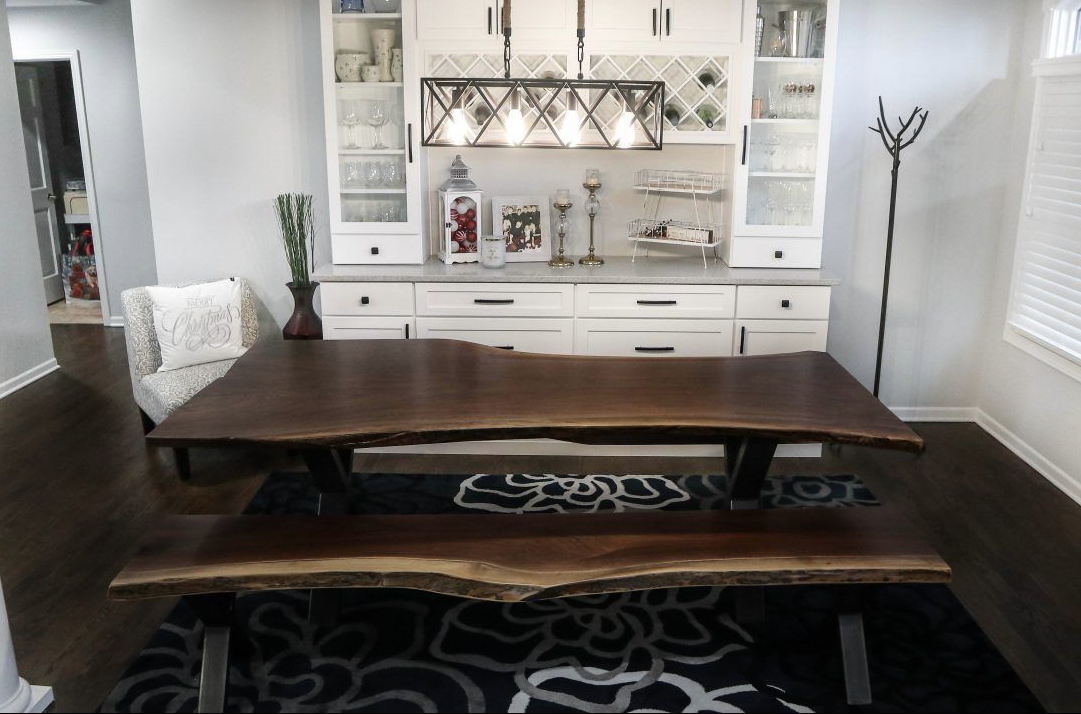
One of the first things people ask when they start thinking about a live edge table is: what kind of wood? It is a good question to ask early, because the species you choose shapes everything else: the color of the piece, the character of the grain, how the table feels in the room, and how it holds up over time.
The short answer is that there is no single best species. The right wood depends on what you are building, where it is going, and what kind of look you are after. But some species come up more often than others for good reasons, and understanding what makes each one distinct makes the decision a lot easier.
Here is a rundown of the live edge wood species we work with most at Element Furniture, and what each one brings to the table.
Black Walnut: The Go-To for Live Edge Work
If you have spent any time looking at live edge furniture, you have seen a lot of black walnut. It is the most popular species for live edge tables by a wide margin, and the reasons are not hard to understand.
Black walnut runs a deep, rich chocolate brown in the heartwood, often shifting toward purple or gray depending on the light. The sapwood, which appears along the edges of the slab, is a creamy tan that creates a natural contrast against the darker core. That contrast is part of what makes a black walnut live edge table so visually compelling.
The grain is typically straight and tight, which means the surface finishes beautifully and the natural edge reads as a clean silhouette rather than a chaotic outline. Black walnut is also a genuine hardwood, which means it holds up well to everyday use without babying.
If you are looking for a live edge walnut table that works in a modern space, a mid-century room, or a refined farmhouse setting, black walnut is a reliable choice. It is versatile enough to go anywhere and distinctive enough to anchor a room.
Walnut vs Black Walnut: Is There a Difference
Worth clearing up because the terms get used interchangeably: in North America, when someone says walnut live edge table, they almost always mean black walnut, which is the species native to the eastern and central United States. It is the same wood. English walnut and Claro walnut are related species with slightly different color profiles, but black walnut is the standard unless another variety is specifically called out.
Black walnut tends to be darker and more consistent in tone than English walnut, which can run lighter with more variation. Both are beautiful. We primarily work with black walnut because it is what grows here and what holds up best over the long term in this climate.
White Oak: A Strong Second Choice
White oak has seen a significant rise in popularity over the past several years, and for good reason. It is a lighter, more neutral-toned wood than walnut, which makes it an easier fit for rooms that lean Scandinavian, contemporary, or transitional.
The color of white oak ranges from pale tan to light brown, with a subtle warmth that reads as natural without being heavy. What sets white oak apart visually is its ray fleck pattern, which appears as fine, silvery streaks in the grain when the slab is quartersawn or rift-sawn. That pattern gives a white oak live edge table a refinement that plain-sawn oak does not have.
White oak is also a closed-grain wood, which means it resists moisture better than red oak and finishes more evenly with an oil or hard wax. For a dining table or a surface that sees regular use, that is a meaningful practical advantage.
If your room has a lot of natural light, lighter upholstery, or a palette that runs cool and neutral, a live edge white oak table tends to feel more at home than walnut, which can sometimes feel heavy in a bright, airy space.
Red Oak vs White Oak for Live Edge Tables
Red oak comes up occasionally as an option and is worth a brief note. It is more widely available and typically less expensive than white oak, but it has an open grain structure that makes it harder to finish and more susceptible to moisture over time. For a live edge oak table, white oak is the better choice in most applications. The grain is tighter, the color is more refined, and the finished piece tends to hold up better. We work primarily with white oak for that reason.
Live Edge Maple Tables: Clean, Light, and Versatile
Maple is a different kind of live edge experience. Where walnut and oak carry a lot of natural drama in their grain and color, maple is clean and restrained. The color runs from nearly white to pale cream, occasionally with subtle pink or gold undertones depending on the specific tree.
That light palette makes a live edge maple table a strong choice for spaces where you want the natural edge to be the focal point without a lot of competing grain character. The outline of the slab reads clearly against the clean surface, which can be striking when the natural edge has an interesting shape.
Maple is also one of the hardest domestic species we work with, making it genuinely durable. It holds up well under heavy use and resists denting better than walnut or oak. For a kitchen island or a dining table in a household with kids, that extra hardness is a real practical benefit.
One thing worth knowing: maple can be tricky to stain evenly because of how it absorbs finish. If you want the wood's natural color, an oil or hard wax finish works beautifully and keeps the piece looking clean and unfussy. If you want a darker stain, it is worth discussing with us before you commit, because the results can vary.
Elm: The Choice for Serious Character
Elm is not as widely known as walnut or oak, but it has a dedicated following among those who want a live-edge table with real personality. The grain in elm is interlocked, which means it grows in alternating directions as the tree matures. The result is a swirling, almost flame-like figure that is difficult to find in any other domestic species.
Elm runs warm in tone, typically a light to medium brown with reddish undertones. It works beautifully in rustic and farmhouse applications where grain character is the whole point. If you are looking for a piece that looks unmistakably handmade and organic, elm delivers that in a way that cleaner-grained species simply cannot.
It is worth noting that elm requires a bit more care in the drying and flattening process because of that interlocked grain. In the right hands, though, it produces some of the most striking slabs we work with.
How to Think About Live Edge Wood Species
When you are trying to narrow down the right species for your table, a few questions help focus the decision.
First, what is the tone of the room? Dark, warm spaces tend to work better with lighter species like maple or white oak. Rooms that run neutral or cool can usually carry the depth of walnut without feeling heavy.
Second, how will the table be used? A heavily used dining table in a busy household benefits from a harder, more forgiving species. Maple and white oak both hold up well under that kind of daily wear. Walnut is durable but can show dents more readily than maple over time.
Third, what finish are you planning? Oil and hard wax finishes let the natural character of the wood show through and are easy to maintain over time. If you are set on a specific look, your choice of finish can affect which species makes the most sense.
And finally: what draws you in visually? You are going to look at this piece every day. If a particular slab stops you in your tracks, that instinct is usually right.
What We Work With at Element Furniture
We build custom live-edge tables in black walnut, white oak, elm, and maple. Each one has a different personality, and part of what makes the custom process enjoyable is helping you figure out which one fits your space and your aesthetic.
If you have a specific species in mind, we can talk through whether it makes sense for the piece you are building. If you are not sure yet, send us photos of your room and a sense of the look you are going for, and we will help you narrow it down. There are a lot of choices, which is exactly how it should be. The right wood for your table is out there.


